
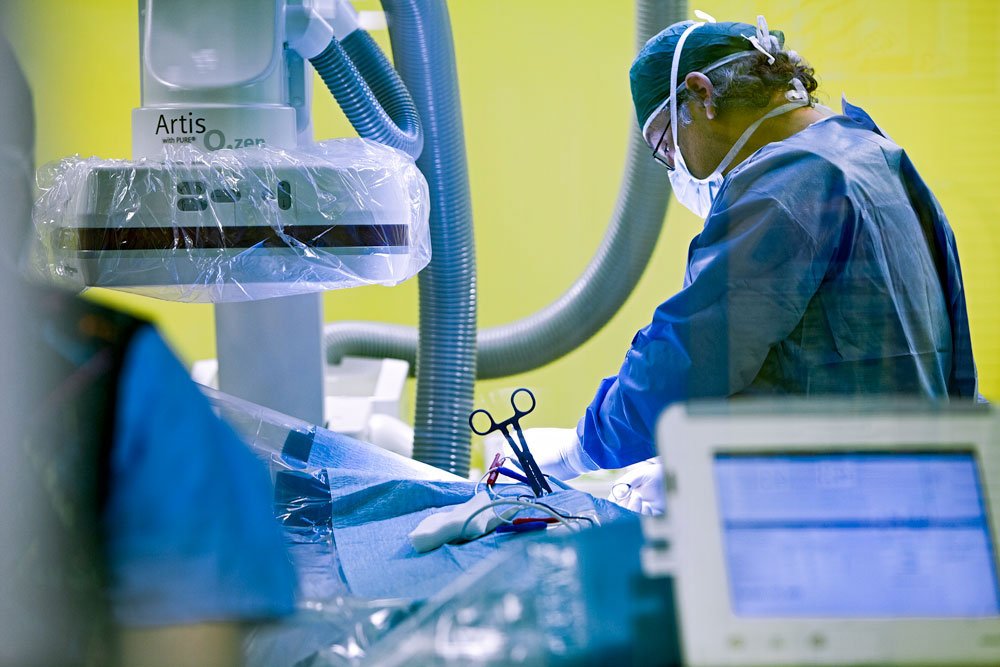
Hemodynamic monitoring is one of the pillars of critical care management in the intensive care unit. For the nurse working in these highly complex environments, the ability to correctly interpret hemodynamic parameters is not just a technical skill, but a true clinical responsibility that can make the difference between life and death.
The term “hemodynamics” refers to the study of blood flow within the circulatory system, and its monitoring allows for real-time assessment of cardiac function, organ perfusion, and the patient's volume status. Among the most important parameters are invasive arterial pressure (arterial line), central venous pressure (CVP), cardiac output, systemic vascular resistance, and mixed venous oxygen saturation (SvO2).
The arterial line, usually inserted into the radial or femoral artery, allows for continuous, beat-to-beat measurement of arterial pressure, enabling immediate detection of even minor changes that could signal hemodynamic deterioration. The nurse must be able to recognize a normal waveform from a pathological one: a damped waveform, for example, can indicate catheter kinking, the presence of air bubbles in the system, or severe hypotension.
The Swan-Ganz catheter, although used less frequently than in the past due to the advent of less invasive technologies, remains a valuable tool in certain contexts. It allows for the measurement of pulmonary artery pressure, wedge pressure (PCWP), cardiac output via thermodilution, and oxygen transport. The management of this device requires specific training and constant attention to possible complications, including arrhythmias, balloon rupture, and thrombosis.
Less invasive techniques, such as PiCCO (Pulse Contour Cardiac Output) and LIDCO, have revolutionized hemodynamic monitoring in recent decades. PiCCO uses transpulmonary thermodilution and analysis of the pressure curve contour to provide advanced parameters such as global end-diastolic volume (GEDV), extravascular lung water (EVLW), and pulse pressure variability (PPV). This latter parameter is particularly useful for guiding fluid therapy in mechanically ventilated patients: a PPV greater than 13% suggests that the patient is “fluid responsive” and may benefit from a fluid bolus.
Point-of-care echocardiography (POCUS) is increasingly becoming an integral part of hemodynamic assessment at the patient's bedside. Through standard acoustic windows—parasternal, apical, subcostal—it is possible to evaluate left ventricular systolic and diastolic function, estimate stroke volume using the velocity-time integral (VTI) of the aortic outflow, and assess volume status through the collapsibility of the inferior vena cava. For the critical care nurse, even just knowing how to correctly assist the physician during an urgent ultrasound, ensure proper patient positioning, and interpret basic images represents an enormous added value.
The management of vasopressor and inotropic therapy is closely related to hemodynamic monitoring. Norepinephrine, epinephrine, dobutamine, and vasopressin are high-risk medications that require precise administration through dedicated infusion pumps, central venous lines, and continuous monitoring of vital signs. The nurse must be knowledgeable about the mechanism of action of each drug, the target blood pressure to achieve (typically a MAP ≥ 65 mmHg in septic patients), signs of overdose, and the most relevant drug interactions.
In conclusion, hemodynamic monitoring in intensive care is a continuously evolving discipline that requires constant updating, critical thinking, and close multidisciplinary collaboration. Specialized training courses represent the most effective tool for acquiring and maintaining these skills at the highest level, ensuring the utmost safety for critically ill patients.