
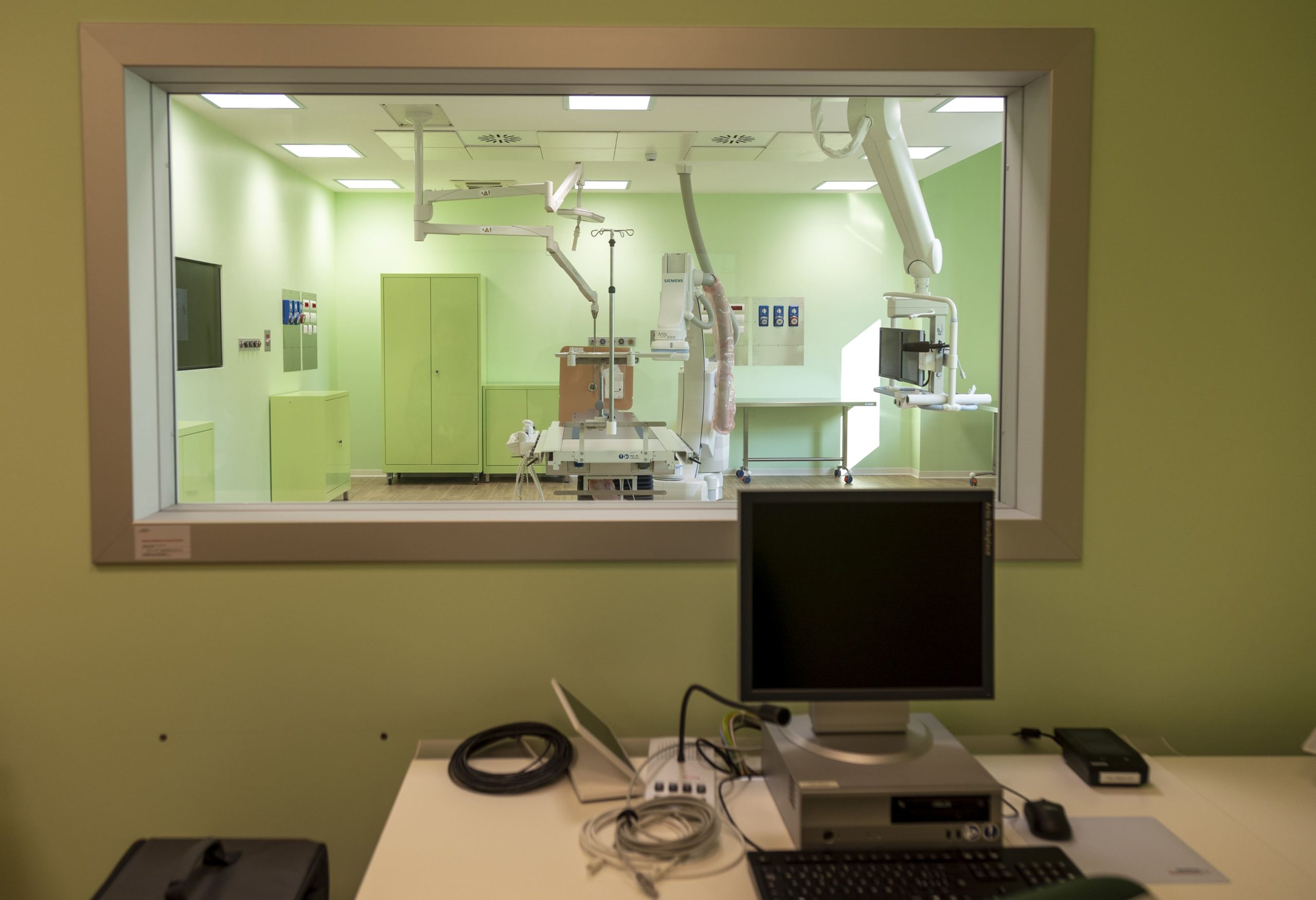
The hemodynamics room, or cardiac catheterization laboratory, is a high-tech environment where minimally invasive diagnostic and therapeutic procedures are performed on the heart and coronary vessels. Over the past thirty years, interventional hemodynamics has revolutionized the treatment of cardiovascular diseases, offering effective alternatives to traditional open-heart surgery for an ever-increasing number of patients. In this context, the hemodynamics room nurse plays a leading technical and caregiving role.
The most common procedure performed in the hemodynamic room is coronary angiography, a diagnostic examination that allows visualization of the coronary arteries by injecting radiopaque contrast agent. The patient is positioned on a radiolucent table, connected to ECG monitoring and pulse oximetry, and vascular access is prepared – usually the right radial artery, preferred due to a lower risk of bleeding complications compared to femoral access. The nurse actively participates in the procedure: preparing sterile materials, managing catheters and guidewires, administering heparin and antiplatelet drugs according to protocol, and continuously monitoring the patient's vital signs.
When coronary angiography reveals significant stenosis (generally more than 70% of the coronary lumen), percutaneous revascularization can be performed directly via percutaneous transluminal coronary angioplasty (PTCA) and stent implantation. There are two main types of stents: bare-metal stents (BMS) and drug-eluting stents (DES), which release antiproliferative drugs to reduce the risk of in-stent restenosis. Stent management requires dual antiplatelet therapy (DAPT) with aspirin and a P2Y12 receptor inhibitor (ticagrelor, prasugrel, or clopidogrel) for a period ranging from 1 to 12 months depending on the type of stent and the clinical context. Nurses play a fundamental role in educating patients about the importance of treatment adherence.
The hemodynamic laboratory is also the reference setting for the management of ST-elevation myocardial infarction (STEMI). In these cases, time is muscle: every minute of delay in opening the artery responsible for the infarction results in further irreversible myocardial damage. The STEMI patient's journey— from arrival in the emergency room to opening the artery in the hemodynamic lab— is subject to very strict protocols aimed at minimizing the “door-to-balloon time,” ideally under 90 minutes. The hemodynamic nurse must be ready to receive the patient at any time, including nights and holidays, and must operate with maximum efficiency and precision in conditions of extreme urgency.
Among the most innovative structural procedures performed in the hemodynamics suite is TAVI (Transcatheter Aortic Valve Implantation), which is the percutaneous implantation of a biological aortic valve to replace the stenotic native valve. This procedure, initially reserved for high-surgical-risk patients, is now also extended to intermediate and low-risk patients thanks to the results of large randomized trials. TAVI is performed under general anesthesia or conscious sedation and requires the simultaneous presence of interventional cardiologists, cardiac surgeons, anesthesiologists, and highly specialized nurses. The most significant complications include complete atrioventricular block (requiring pacemaker implantation), paravalvular leak, stroke, and vascular access complications.
Another highly effective procedure is percutaneous closure of a patent foramen ovale (PFO) in patients with cryptogenic stroke. A PFO is an embryonic remnant present in 25–30% of the general population that normally causes no problems, but in some individuals may facilitate the passage of emboli from the venous to the arterial circulation, causing stroke or transient ischemic attacks. The closure is performed using an umbrella-shaped device (such as the Amplatzer PFO Occluder), which is deployed through the interatrial septum under transesophageal echocardiographic and fluoroscopic guidance. The nurse must be able to assist with the use of intra-procedural TEE, manage sedation, and closely monitor the patient during and after the procedure.
Radiation protection is ultimately a topic of great importance for those working in the hemodynamic lab. Chronic exposure to ionizing radiation represents a real occupational hazard that must be managed consciously. The correct use of personal protective equipment (lead aprons, thyroid collars, anti-X glasses), correct positioning relative to the radiation source, minimization of fluoroscopy times, and the use of low-dose techniques are fundamental practices that every hemodynamic lab professional must internalize. The personal dosimeter must be worn regularly, and the readings must be monitored over time to ensure they remain within the legal limits set by radiation protection regulations.